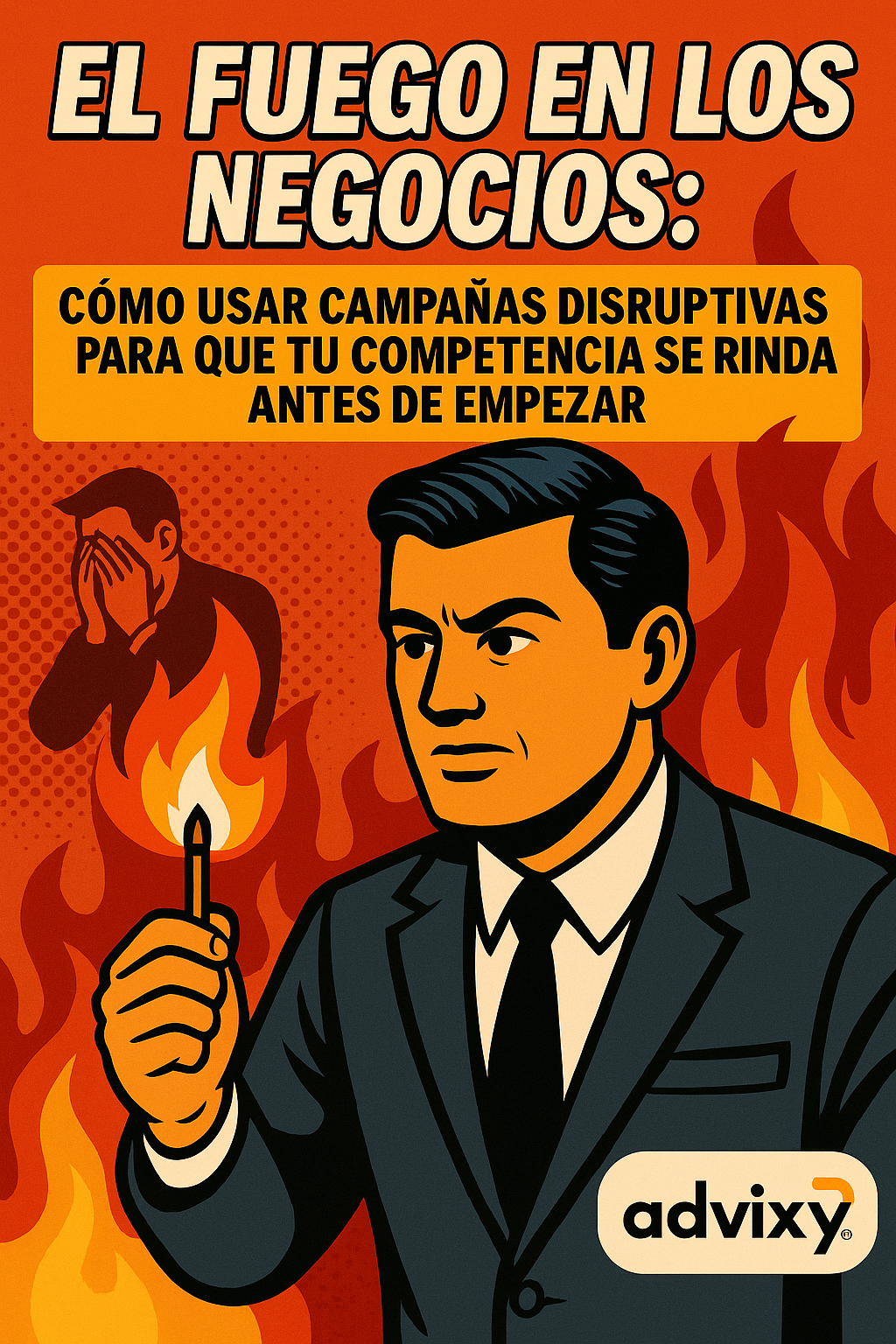
“Fire is dangerous.
If you don’t know how to control it, it will destroy yourself.
But if you know when and how to light it…
you can mercilessly ravage your enemy.”
– Sun Tzu
🔥 Why do most companies hesitate to light the fire?
It’s not because they don’t know what it is. It’s because they’re afraid of getting burned.
Most businesses get stuck in a conservative survival mode, where unwritten rules outweigh ambition:
- They fear making competitors uncomfortable and “making enemies” in their sector.
- They avoid bold campaigns for fear of “going wrong”.
- They prefer not to inconvenience their current customer base, even if it means not growing.
And so, little by little, they become invisible. Companies that work… but always in the shadow of those that dare to light a flame.
💡 Real example: Kodak invented the digital camera in 1975. Why didn’t it launch? Because it was afraid of “upsetting” its traditional film business. Result: it was overtaken and virtually wiped out of the market by companies that did set fire.
⚡ What does “fire” mean in business today?
We’re not talking about shouting louder, we’re talking about creating an impact that is impossible to ignore:
- Disruptive marketing that makes your brand stay in the customer’s mind.
- Innovations that destroy obsolete models and force everyone to catch up.
- Strategic campaigns that make the competition move… but at your pace.
The fire is that moment when the market realizes that you are no longer just another option, but the benchmark.
💡 Real example: Tesla did not sell “electric cars”, it sold the idea that the future is electric and it is here. And it did it so forcefully that it forced giants like Ford or Volkswagen to accelerate decades of R&D in just a few years.
📜 How to use fire according to Sun Tzu (and Advixy)
- Choose the perfect moment
- An attack too soon is extinguished. One too late, it no longer burns.
- It observes trends, analyzes the market and detects when the ground is dry and ready to burn.
- Directing fire at the opponent’s weaknesses
- Don’t attack where your competition is strong.
- Do it where they have cracks: poor service, slow processes, lack of innovation, poor communication.
- Always have escape routes
- A disruptive campaign must have a plan B.
- If the strategy generates a negative reaction, you must redirect it so that the fire purifies… and does not consume you.
🚨 Real cases: when lighting the fire changed history
- Apple and “Think Different”: it wasn’t selling computers, it was selling the idea of being part of a creative elite that challenges the status quo.
- IKEA and its competitive humor: campaigns that subtly ridicule its rivals and make the consumer feel that “IKEA gets it better than anyone else”.
- Ryanair and strategic provocation: controversial ads and unbeatable prices that generated free headlines in the international press… and millions in sales.
- Dollar Shave Club: a homemade, sarcastic and direct video against the razor giants. Result: millions of customers and a $1 billion takeover by Unilever.
🔑 Business reflection
On the corporate board, he who controls the fire controls the pace of the war.
It is not dangerous to light it.
What is dangerous is to let others do it first.
At Advixy we know where, when and how to light the spark that will make your competitors retreat before they even start.
It’s not about making noise: it’s about lighting a flame in your customer’s mind so they can’t forget you.
Ready to fire it up together?
📩 Contact us.
War doesn’t wait. Opportunity doesn’t either.
Further reading: Competitive intelligence: data and market secrets and The invisible war in business: how to respond.